
Table of Contents
What is Withholding Tax?
Withholding tax is a tax collection mechanism where the payer of income (such as wages, interest, dividends, or royalties) is required to deduct tax at source before making payment to a non-resident recipient. Rather than the recipient paying tax directly to the government, the payer withholds a portion of the payment and remits it to the tax authority on behalf of the recipient.
This system serves several important purposes:
- Revenue collection: Ensures tax revenue is collected on income earned within a jurisdiction, even when paid to non-residents
- Compliance: Simplifies tax compliance by placing the withholding obligation on the payer rather than the recipient
- Prevention of tax evasion: Reduces the risk of non-residents failing to pay tax on income earned in the source country
How Withholding Tax Works
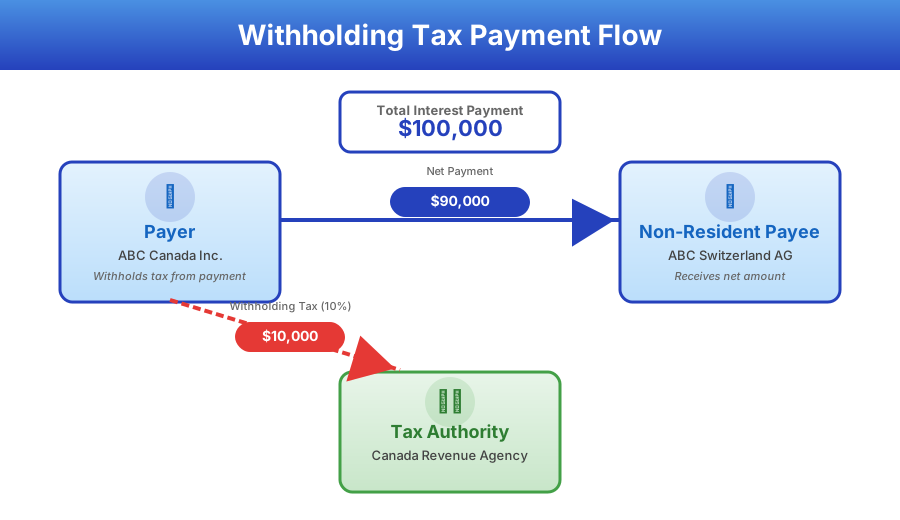
The withholding tax process involves three parties: the payer, the non-resident payee, and the tax authority. The diagram below illustrates how a $100,000 interest payment is subject to 10% withholding tax:
The amount of withholding tax varies based on several factors:
- Jurisdiction: Different countries have different statutory withholding tax rates
- Income type: Interest, dividends, royalties, and services may have different rates
- Tax treaties: Bilateral tax treaties often provide for reduced rates or exemptions
- Relationship: Related-party transactions may be subject to special rules or scrutiny
Common Withholding Tax Rates
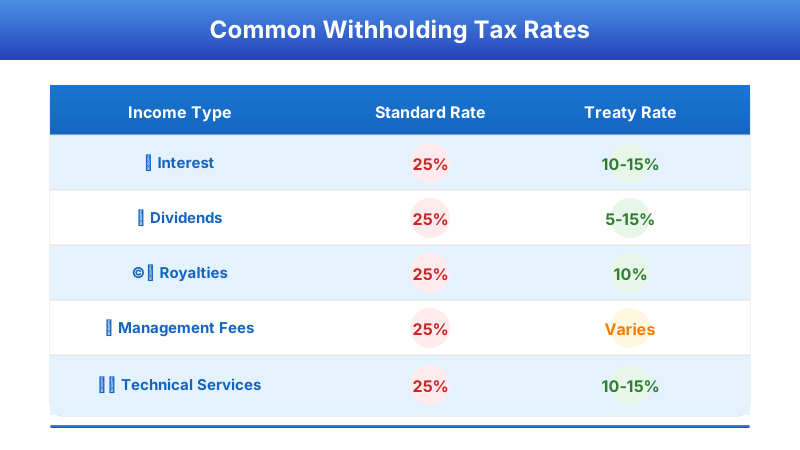
Withholding tax rates vary significantly by jurisdiction and income type. The table below shows typical rates that may apply:
Key considerations for tax treaties:
- Tax treaties are bilateral agreements between countries designed to prevent double taxation
- Treaties typically reduce withholding rates below statutory rates
- To claim treaty benefits, recipients usually must provide documentation (e.g., tax residency certificates)
- Some treaties require advance rulings or clearances from tax authorities
It is critical for companies to accurately record and report withholding tax obligations to avoid penalties, interest charges, and potential double taxation. Companies should also monitor changes in tax laws, treaty networks, and administrative requirements to ensure ongoing compliance.
Tip: If you operate in multiple jurisdictions, keep a simple checklist for (i) statutory rate, (ii) treaty reduction/exemption, (iii) required documentation, and (iv) remittance deadlines.
Journal Entries for Withholding Tax
Journal entry for withholding tax on interest payment
Example: ABC Canada Inc. pays interest of $100,000 to its non-resident parent, ABC Switzerland AG. As the parties do not deal at arm’s length, and in accordance with the Canada-Switzerland Tax Treaty, the interest payment is subject to a 10% withholding tax. ABC Switzerland AG, therefore, receives a net payment of $90,000.
| Account | ||
|---|---|---|
| Interest expense | $100,000 | |
| Withholding tax liability | $10,000 | |
| Cash | $90,000 |
Journal entry for remittance of withholding tax
Example: ABC Canada Inc. must remit the withholding tax withheld on the interest payment to ABC Switzerland AG, to the Canada Revenue Agency.
| Account | ||
|---|---|---|
| Withholding tax liability | $10,000 | |
| Cash | $10,000 |
