
What is Income Tax Expense?
Income tax expense represents the total amount of current and deferred income taxes that a company owes based on its taxable income for a specific accounting period. It is calculated by applying the applicable tax rate to the company's taxable income, adjusted for any permanent or temporary differences between book income and taxable income.
Income tax expense serves several critical functions in financial reporting:
- Matching principle: Ensures tax expense is recognized in the same period as the related pretax income
- Performance measurement: Enables calculation of after-tax profitability and net income
- Effective tax rate calculation: Provides insight into the company's overall tax burden as a percentage of pretax income
- Decision-making: Helps management and investors understand the impact of taxes on business operations and cash flows
Income tax expense is reported on the income statement as a deduction from pretax income to arrive at net income. The corresponding liability is recorded as "income tax payable" on the balance sheet.
Accrual Accounting and Income Tax Expense
Under accrual accounting, income tax expense is recognized in the period in which the income is earned, not when the tax is actually paid. This creates a timing difference between the recognition of tax expense and cash payment. Companies typically make quarterly estimated tax payments (installments) throughout the year, with a final reconciliation when filing the annual tax return.
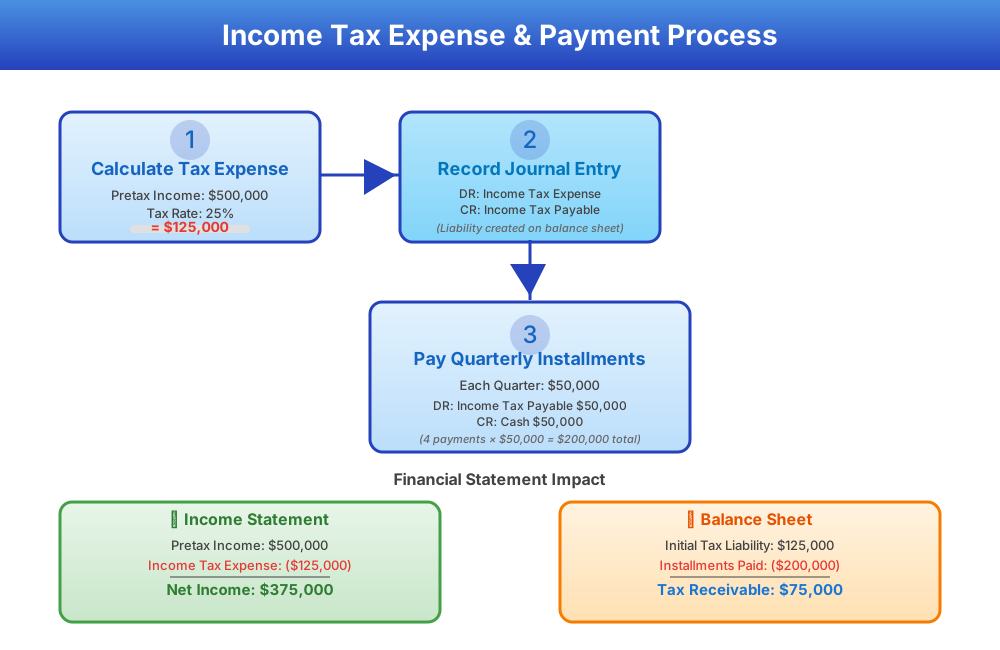
Journal Entries for Income Tax Expense
Recording income tax expense involves creating a journal entry that recognizes both the expense on the income statement and the corresponding liability on the balance sheet. The entry consists of:
- Debit: Income Tax Expense (expense account, reduces pretax income)
- Credit: Income Tax Payable (current liability, obligation to pay tax authorities)
This entry follows the accrual principle by matching the tax expense with the period in which the related income was earned, regardless of when the actual cash payment occurs.
Recording Annual Income Tax Expense
Example: ABC Corp. earned pretax income of $500,000 during its fiscal year. With an effective income tax rate of 25%, ABC Corp. will recognize $125,000 of income tax expense for the year.
Calculation:
- Pretax income: $500,000
- Effective tax rate: 25%
- Income tax expense: $500,000 × 25% = $125,000
| Account | ||
|---|---|---|
| Income tax expense | $125,000 | |
| Income tax payable | $125,000 |
Impact on financial statements:
- Income Statement: Income tax expense of $125,000 reduces pretax income to net income of $375,000
- Balance Sheet: Income tax payable of $125,000 is recorded as a current liability
- Effective Tax Rate: $125,000 ÷ $500,000 = 25%
Journal Entries for Income Tax Payments
Income tax installments (also known as estimated tax payments or prepaid taxes) are periodic payments made by companies to tax authorities throughout the fiscal year to cover their anticipated income tax liability. These payments serve several purposes:
- Cash flow management: Spreads the tax burden across the year rather than requiring a single large payment
- Regulatory compliance: Many jurisdictions mandate quarterly or monthly installments for companies above certain thresholds
- Penalty avoidance: Failure to make adequate installments can result in underpayment penalties and interest charges
How Installment Payments Work
Companies estimate their annual tax liability and make periodic payments (typically quarterly) based on this estimate. At year-end, the actual tax liability is calculated when filing the corporate tax return. The comparison of installments paid versus actual liability determines whether:
- Overpayment: Installments exceed actual tax liability → refund or credit to next year
- Underpayment: Actual tax liability exceeds installments → additional payment required
- Exact match: Installments equal actual tax liability → no further action needed
Recording Quarterly Tax Installment Payments
Example: ABC Corp. makes quarterly tax installment payments of $50,000 each quarter (4 payments × $50,000 = $200,000 total annual installments).
Each quarterly payment is recorded as:
| Account | ||
|---|---|---|
| Income tax payable | $50,000 | |
| Cash | $50,000 |
This entry reduces the income tax payable liability account by the amount of cash paid to the tax authority.
Year-End Reconciliation
At year-end, companies reconcile their installment payments against actual tax liability. Using our example above:
- Actual income tax expense for the year: $125,000
- Total installments paid during the year: $200,000 (4 × $50,000)
- Result: Overpayment of $75,000
The $75,000 overpayment creates an income tax receivable (asset) that will be either refunded by the tax authority or applied as a credit against future tax liabilities, depending on company preference and tax authority rules.
Note: Companies should carefully monitor their estimated tax payments throughout the year and adjust quarterly installments if business performance significantly exceeds or falls short of projections to avoid large overpayments or underpayment penalties.
